
Pieter Uni

Manager, Communications and Engagement

Phone: 250.807.9413
Email: pieter.uni@ubc.ca


Responsibilities

Pieter works with campus partners to host and promote events and workshops, including 3MT and orientation. He also manages communications and marketing, including the COGS website and social media accounts.


For some scholars, the path to academia begins with a single moment of clarity. For Dr. Madeleine Ransom, Associate Professor of Philosophy at UBC Okanagan, that moment arrived in an unexpected place: her Grade 5 English classroom.

Her teacher, Judy Kyle—who had completed a master’s thesis on teaching philosophy to children— taught the children sentential logic, and Ransom was hooked. Her teacher also noticed something striking about Ransom’s way of thinking. “She told my mother that my mind went in different directions compared to other students,” Ransom recalls with a laugh. “I still don’t know if that was a compliment or a warning.”

What began as childhood fascination grew into a lifelong pursuit.

A Scholar Shaped by Big Questions

By the time Ransom reached university, she had fallen in love with philosophy after reading the existentialists and revisiting the feeling of wonder sparked in her childhood classroom. She majored in philosophy simply because she loved it—never imagining it could become a career.

“It didn’t occur to me until my final undergraduate year that the people teaching me were gainfully employed,” she says. “I knew academia was competitive, but I went to graduate school because studying philosophy felt worthwhile, even if I ended up doing something entirely different.”

Her passion carried her through a PhD, earning accolades along the way, including the prestigious Governor General’s Gold Medal for her dissertation. But the motivations behind her academic journey remained constant: a desire to understand how people learn, perceive, and make sense of the world.

When the opportunity to join UBC Okanagan arose, the fit felt natural. “I’m deeply committed to Canadian education and research,” she says. “And I love the West Coast. Kelowna is an amazing place to live, and UBCO has been deeply supportive of my work.”

Teaching Philosophy as a Skillset—and a Way of Seeing the World

At UBCO, Ransom teaches some of the most foundational and wide-ranging topics in philosophy, often introducing first-year students to the discipline.

“I love talking to students about big philosophical questions,” she says. “Do we have free will? Could morality exist without religion? Can a chatbot be a genuine friend? What gives our lives meaning? First-year students are incredibly curious—they want to grapple with the big issues and they mostly haven’t had the chance to do so in high school.”

Her teaching philosophy is rooted in three key principles:

  1. Broadening Perspectives.
    Ransom invites students to feel the force of philosophical questions before diving into technical details. “I want them to leave with a broader sense of life and the world.”
  2. Philosophy as a Learnable Skillset.
    She strives to dismantle the intimidating “genius culture” associated with philosophy. Students learn practical building blocks—how to read a philosophical text, reconstruct an argument, and craft an objection—so they can see the discipline as something they can master with practice.
  3. Applying Philosophy to Contemporary Life.
    Whether exploring social biases, the ethics of emerging technologies, or the moral puzzles surrounding sex robots and artificial intelligence, Ransom emphasizes how philosophy matters beyond the classroom.

“My classroom is a safe, welcoming, and productive space,” she adds. “Philosophy is for everyone.”

Mentoring the Next Generation

Beyond undergraduate teaching, Ransom supervises both graduate and undergraduate research. She currently oversees an MA student who is developing an Ubuntu-based theory of trust for AI governance, and she works closely with undergraduate researchers—including one with whom she has co-authored a paper.

“Our project, ‘A Dilemma for Skeptics of Trustworthy AI,’ has been presented at two conferences already, with more on the way,” she says. “Co-writing it has been incredibly fun.”

For Ransom, supporting students as they develop their own philosophical voices is one of the most rewarding parts of her role.

Research at the Intersection of Expertise, Learning, and AI

Ransom’s research investigates how expertise, learning, and bias shape human cognition—and how those same processes intersect with artificial intelligence. Though she is a philosopher, she has collaborated with psychologists, neuroscientist, and computer scientists. Her work has  been published in leading interdisciplinary journals such as Cognition, Review of Philosophy and Psychology, and Wiley Interdisciplinary Reviews: Cognitive Science.

Much of her earlier work critically examined predictive coding, a major research program in cognitive science. Her publications questioned several foundational commitments of the theory, prompting responses from prominent scholars and influencing subsequent experimental work.

Her research on perceptual learning has earned multiple major awards and explores how humans develop expert abilities: how pilots detect enemy aircraft, how musicians hear subtle chord changes, how people learn to perceive social categories, or how aesthetic experience deepens with training.

Recently awarded a Canada Research Chair, Ransom is now expanding her work to focus on the value of human expertise in a rapidly changing technological world.

“As AI begins to supplement or replace forms of human expertise, it’s crucial that we understand the value human expertise brings to individual flourishing and to society,” she says. Her current work aims to inform government and corporate policy on integrating AI in ways that protect human wellbeing.

She is also deeply involved in interdisciplinary projects through UBC’s Digital Transparency Research Excellence Cluster, leading a collaborative project on the topic of what “trustworthy AI” should mean—philosophically, ethically, and practically.

“I want my research to help shape our collective future,” she says. “The pace of technological change is extraordinary, and philosophy has an important role to play in making sure that change aligns with human values.”

A Scholar Rooted in Nature—and Curiosity

Outside the classroom and research lab, Ransom spends much of her free time outdoors. She is an avid hiker, cross-country skier, and enthusiastic mushroom forager. “I found reishi for the first time,” she says proudly. “That was a real highlight.”

Looking ahead, her hopes are simple: “In 5 to 10 years? I’m not sure where I’ll be exactly,” she says. “But I hope there’s hiking involved.”

A Life Shaped by Questions

From her first philosophy lesson in Grade 5 to her award-winning research and her leadership in shaping ethical AI policy, Dr. Madeleine Ransom’s career is built on a love of deep questions—and a desire to help others engage with them.

“Philosophy expands your sense of the world,” she says. “My hope is that students leave my classes with that same sense of possibility.”

Before entering academia, Dr. Manfred Elfstrom, Associate Professor of Political Science at UBC Okanagan, was driven by firsthand encounters with people and movements striving for social change. His academic journey emerged from years of work with non-profit organizations advancing labour rights in China, and with an initiative tracking China’s experiment with village elections. Through this work, Dr. Elfstrom encountered individuals and civil society groups who achieved meaningful victories in difficult political contexts — breakthroughs that led him to ask bigger questions about how such efforts accumulate, and what conditions might enable broader transformation.

This curiosity about real-world political dynamics ultimately drew him back into formal study. Dr. Elfstrom’s doctoral research examined workers organizing in China, revealing how such organizing produced contradictory outcomes: it expanded both the state’s capacity for responsiveness and its means of repression, resulting in what he described as a distorted form of political development. Over time, Dr. Elfstrom’s work has broadened to place Chinese politics in comparative perspective, identifying parallels and contrasts with other settings and, most recently, exploring civic participation in natural resource–dependent regions in different parts of the world.

A Cross-Disciplinary Role at UBC Okanagan

At UBCO, Dr. Elfstrom pursues research on China, labour politics, social movements, and authoritarianism, while teaching undergraduate courses that bring these themes to life. He also contributes to the interdisciplinary Global Studies program by leading graduate seminars.  Dr. Elfstrom also serves as Program Coordinator for the International Relations Major — a program that introduces students to global issues through a wide array of disciplines including Anthropology, Economics, History, Indigenous Studies, Philosophy, Political Science, and Sociology.

He finds great joy in conducting fieldwork abroad and in those moments when students, through rigorous inquiry, begin to see the world through the lens of social science and think how they can use that lens to inform their political involvement. At the same time, Dr. Elfstrom embraces the challenges of academic life, balancing teaching, research, program leadership, and mentoring.

Teaching with Curiosity and Care

Dr. Elfstrom’s teaching philosophy centers on fostering both engagement and analytical precision. He aims to instill in students not only excitement about politics, but also the ability to study it rigorously and communicate findings effectively. His classrooms are welcoming yet challenging spaces where strong opinions are debated with civility, and where students grapple with empirical puzzles tied to their normative commitments. Dr. Elfstrom encourages students to ask, for instance: if you wish to understand why some countries have higher inequality than others, what data do you need, and how should you approach comparing them?

In his undergraduate seminars on social movements, students engage in research exercises that range from survey design to interviews with local community members. The end-of-semester research presentations, in which students reflect on and discuss their findings with classmates, stand out as especially meaningful moments in Dr. Elfstrom’s teaching.

Research That Illuminates Ordinary People’s Agency

Dr. Elfstrom’s enduring research interest lies in understanding how ordinary people can reshape institutions that dominate their lives. Among his most meaningful projects is an ongoing comparative study of civic participation in coal-dependent regions of Appalachia and northern China. This work combines interviews with activists and community members and a large-scale quantitative data project that catalogs collective actions — from protests and strikes to petitions and lawsuits — across both regions. Leading a team of student research assistants through this complex analytical work has been one of Dr. Elfstrom’s most rewarding experiences at UBCO.

Beyond Academia

Beyond his academic work, Dr. Elfstrom maintains longstanding interests in art and history. An undergraduate major in both fields, he continues to paint and draw, reads widely— especially in history—and enjoys spending time outdoors in the Okanagan.

Impact and Aspirations

Dr. Elfstrom’s first book, Workers and Change in China: Resistance, Repression, Responsiveness (Cambridge University Press, 2021), remains his proudest professional accomplishment to-date, both for its scholarly contribution and for the questions it continues to inspire. He was also honoured with an Outstanding Instructor award, recognizing his commitment to teaching excellence.

As Dr. Elfstrom looks to the years ahead, his work remains guided by a commitment to understanding how collective action unfolds under constraint, and what it reveals about the possibilities for meaningful political change. Through research that bridges regions and methodologies, and through teaching that encourages both curiosity and care, he seeks to equip students with the analytical tools needed to engage thoughtfully with a complex world.

Whether conducting fieldwork, mentoring student researchers, or guiding undergraduates through their first sustained encounters with political analysis, Dr. Elfstrom’s work reflects a belief that careful scholarship and engaged teaching can illuminate paths forward—even in the most challenging political contexts.


A scholar of constitutional law, judicial politics, and political theory, Dr. Sigalet’s path has been defined by curiosity, mentorship, and a lifelong fascination with the workings of power, law, and justice.For many students, university is a place where ideas collide—where debate, inquiry, and intellectual courage take root. For Dr. Geoffrey Sigalet, Assistant Professor of Political Science at UBC Okanagan, these moments of dialogue are not only the essence of academic life—they are the foundation of his teaching, research, and leadership on campus.

A scholar of constitutional law, judicial politics, and political theory, Dr. Sigalet’s path has been defined by curiosity, mentorship, and a lifelong fascination with the workings of power, law, and justice. Today, he channels that passion into his teaching and research at UBCO, inspiring students to engage critically with Canada’s constitutional system and the principles that underlie democratic life.

From Calgary Roots to Constitutional Questions

Born in Edmonton and raised in Calgary, Alberta, Dr. Sigalet grew up surrounded by lively political debate. “Politics was part of daily life,” he recalls. “My family loved talking about current events and public policy around the dinner table.”

Those conversations—and morning car rides listening to Alberta talk radio with his auntie Jo—sparked an early interest in public affairs. Still, when he began his undergraduate studies at the University of Alberta, Dr. Sigalet initially chose a path in the sciences.

“I thought I would become a doctor,” he laughs. “But then I took an introductory political science course and was completely hooked.”

The world of ideas—particularly political philosophy—captivated him. Influential professors like Don Carmichael, Heidi Studer, and Jason West introduced him to the works of Plato, Aristotle, and Augustine, laying the foundation for a deep interest in ethics and ancient political thought. “I thought I would be a political theorist,” he says, “and I still try to carry that philosophical lens into everything I do.”

After completing his undergraduate degree, Dr. Sigalet pursued a Master’s degree at McGill University, where he explored Aristotle’s concept of shame under the supervision of Dr. Christina Tarnopolsky. His academic journey continued to Princeton University, where he began to blend political theory with public law, writing a dissertation on constitutional dialogue between courts and legislatures under the guidance of Professors Keith Whittington, Philip Pettit, and Jan-Werner Müller.

Building Bridges Between Law and Politics

Dr. Sigalet’s intellectual curiosity soon led him to Stanford Law School as a postdoctoral fellow, where he deepened his expertise in constitutional law under the mentorship of Professor Michael McConnell, a former circuit court judge. “I probably learned more about law from our late-night conversations than from any classroom,” he says.

That experience—paired with further research fellowships at Queen’s University and McGill University—cemented his interest in how courts exercise power, interpret rights, and shape public life. “Law is fascinating because it sits at the crossroads of so many disciplines,” he explains. “It’s full of deep, empirical, and moral questions about how institutions work and what justice requires.”

When the opportunity to join UBC Okanagan’s Department of Economics, Philosophy and Political Science presented itself, Dr. Sigalet saw an opportunity to bring his interdisciplinary approach to a growing campus. “I was hired to help build UBCO’s capacity in public law and political science—and to bring more law to the Okanagan,” he says.

That mission led him to establish the UBC Research Group on Constitutional Law, which connects faculty and students across both UBC campuses. Under his leadership, the group has hosted annual UBC Constitutional Lectures, featuring justices of the Supreme Court of Canada and leading scholars from around the world. “For students, it is an incredible chance to engage directly with the people shaping Canadian law,” he says.

Teaching Through Dialogue

Inside the classroom, Dr. Sigalet is known for his dynamic, dialogue-driven teaching style—what he calls a “light Socratic method.” Whether teaching Introduction to Law and Politics or advanced seminars on the Charter of Rights and Freedoms, his goal is the same: engagement through conversation.

“I want students to come prepared, think critically, and be part of the discussion,” he says. “Even in a large lecture, I’ll ask, ‘What do you think about that?’—because dialogue is how we learn.”

He believes this approach builds confidence and readiness for the real world. “Whether students go on to become lawyers, policymakers, or researchers, they need to think on their feet, defend their ideas, and engage respectfully with others. University should be training for that.”

Dr. Sigalet’s courses on Canadian federalism, the Charter, and constitutional structures are among the most popular in the program. He takes pride in showing students that Canadian politics is anything but dull. “Once you dig into the history, the court cases, and the political struggles that shaped our country, it’s full of fascinating debates,” he says. “I love watching students’ eyes light up when they realize how alive and relevant these issues are.”

Research and Impact

At the core of Dr. Sigalet’s research is one central question: How does judicial power work? His scholarship explores the nature of constitutional dialogue between courts and legislatures, the legal and political role of the Charter’s notwithstanding clause, and the evolution of Canadian federalism.

“I am interested in why courts hold the power they do, and whether they should,” he explains. “Understanding that helps us think critically about democracy and the rule of law.”

His work has gained national attention, with provincial attorneys general citing his research in legal arguments before the courts. “Seeing my scholarship influence real legal debates was one of my proudest professional moments,” he says.

For Dr. Sigalet, these moments demonstrate the importance of connecting academic inquiry with public life. “The goal is always to illuminate—not just for scholars, but for judges, policymakers, students, and citizens who care about how our democracy functions.”

Mentorship, Community, and the Next Generation

Beyond his teaching and research, Dr. Sigalet is deeply invested in student mentorship. He serves as faculty sponsor for the undergraduate Runnymede Society, a student-led organization dedicated to discussion of constitutionalism, freedom, and the rule of law. Through the group, students attend national conferences, meet Supreme Court justices, and engage in high-level legal debate.

“It is incredibly rewarding to watch students grow into confident thinkers and leaders,” he says. “Some come from small towns in the interior, and suddenly they’re having dinner with a Supreme Court judge. Those are transformative experiences.”

He’s also helped launch the PPE Conversations Series, bringing prominent scholars and judges to campus for public talks that bridge philosophy, politics, and economics—further enriching the intellectual community at UBCO.

Beyond the Classroom: Family, Skiing, and the Good Old Days

When he is not teaching or researching, Dr. Sigalet can often be found outdoors. A passionate skier, he enjoys downhill, cross-country, and backcountry skiing, and even competed in biathlon as a teen. “It’s like a Norwegian drive-by,” he jokes, quoting Robin Williams. In the warmer months, he’s an avid fly fisher.When he is not teaching or researching, Dr. Sigalet can often be found outdoors. A passionate skier, he enjoys downhill, cross-country, and backcountry skiing, and even competed in a biathlon as a teen. “It’s like a Norwegian drive-by,” he jokes, quoting Robin Williams. In the warmer months, he’s an avid fly fisher.
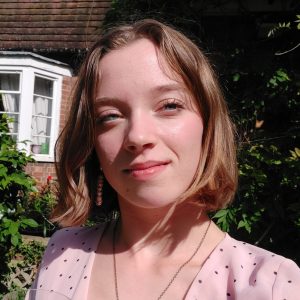
Life in the Okanagan feels full circle for Dr. Sigalet, whose family roots run deep in the region—his great-grandfather established one of the area’s first sawmills near Lumby. Now, he and his wife are raising their young family here. “Starting our family in the Okanagan has been a joy,” he says. “It feels like coming home.”

Words to Students

Asked what advice he would give to aspiring students of politics and law, Dr. Sigalet’s answer reflects the dialogue-driven spirit that defines his work.

“Come prepared, stay curious, and engage with courage,” he says. “University is your chance to test ideas, challenge assumptions, and learn through conversation. That is where real understanding—and real growth—happens.” He then suggests that students “should try to read books, especially old books, cover to cover” to cultivate the life of the mind in a world of artificial intelligence and short attention spans.

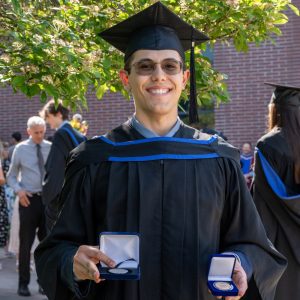
Meet Olivia Martiskainen, co-winner of the 2025 Walley Lightbody Award in Law:

Name: Olivia Martiskainen
Program: Economics
Graduated: June 2025

What drew you to this program, and how did it shape your academic path?
I was drawn to the department for its interdisciplinary approach, which allowed me to explore the connections between economics, political science, and philosophy. This breadth helped shape my critical thinking and sharpened my interest in systemic issues like inequality and public policy. The program gave me the academic foundation and confidence to pursue law.
Were there any standout courses or faculty members who influenced your journey?
Courses in public economics, law and economics, and healthcare economics stood out to me for their real-world relevance and complexity. Professors who encouraged open discussion and critical inquiry had a lasting impact on my academic development. Their mentorship and feedback pushed me to remain open-minded and communicate my opinions more effectively.

What made you decide to pursue a career in law?
Through my academic work and community engagement, I developed a strong interest in how laws shape economic and social outcomes. I want to work in areas like labour or public interest law to help build more equitable systems. Law offers the tools to advocate for meaningful change and uphold justice.

How did your involvement in the department or on campus help you prepare for law school?
Serving as a teaching assistant and volunteering in community health and cultural organizations helped me develop strong communication and leadership skills. I was also involved in multiple student clubs and sports, which helped me make new friends and connections and improve my networking skills. These hands-on experiences complemented my academic studies and prepared me for the demands of law school.

What was the application process like for the Walley Lightbody Award in Law?
I appreciated that the application process was relatively straightforward. The application encouraged me to reflect on how my studies, values, and future goals aligned with the purpose of the award, and I liked that there was some flexibility introduced by being able to write a letter of intent rather than answer a set of questions.

How did it feel to receive the award?
I am honoured and grateful to be selected from what I have heard was a very competitive and well-qualified group of applicants. It felt rewarding to have my academic and professional goals recognized in this way.

How has the award helped you as you prepare for your next chapter?
The award has eased financial stress, allowing me to focus more on preparing for law school entrance and related opportunities. It also serves as a powerful reminder of the support available for students pursuing socially meaningful careers. The recognition has motivated me to continue striving for excellence in my future studies.

What are your future plans?
I will begin law school in the fall at McGill University in Montreal. I am excited to learn more about the different fields of law and see what fits my interests and capabilities. Currently, I am feeling more drawn toward public interest or public policy focused legal fields, but this may change.

What advice would you give future students?
Take advantage of every opportunity to connect what you learn in the classroom to real-world issues. Always say yes to the chance to learn something new. Don’t be afraid to pursue a non-linear or non-traditional path, experiences outside of academics or outside of your field of study can be just as formative and give you many transferable skills.

Is there anything you’d like to say to the program/department or the donor?
I’m deeply thankful to the department for its encouragement and to Mr. Walley Lightbody for his generosity in supporting future legal professionals. This award has made a difference for me and affirmed my commitment to the study of law. Your support inspires me to keep pushing forward.

Meet Mihai Covaser, co-winner of the 2025 Walley Lightbody Award in Law:

Name: Mihai Covaser
Program: Bachelor of Arts double major in Philosophy, Political Science and Economics, and French
Graduated: June 2025
Hometown: Kelowna, British Columbia

What drew you to this program, and how did it shape your academic path?
I was attracted to the PPE program by the prospect of challenging myself to study these three deeply interrelated fields in preparation for further legal studies. The fact that this unique opportunity was available to me so close to home and in a tightly-knit, community-oriented university was a true stroke of good fortune. I am more passionate than ever about attending law school and working in the legal profession in the future.
Were there any standout courses or faculty members who influenced your journey?
I think very highly of the contributions Dr. Geoffrey Sigalet, Dr. Andrew Irvine and Dr. Renaud-Philippe Garner made to my UBCO experience. Their expertise in their respective fields is only matched by their skill in communicating their passion to their students and their desire to see students succeed. In their courses, I cultivated not only practical historical and theoretical knowledge but also critical thinking and analysis skills, which will be crucial in my future education.

What made you decide to pursue a career in law?
Since I was young, I felt drawn to the public-facing, justice-oriented role embodied by lawyers I saw in the media and in my community. Throughout my undergraduate studies, I have only become more attracted to the wide variety of career paths available with a legal education and to the complexity and vital importance of legal theory in our democratic system.

How did your involvement in the department or on campus help you prepare for law school?
Aside from the courses themselves, my involvement in the PPE department has given me a wealth of experience to draw upon when I get to law school. I have had the chance to meet prominent figures in the Canadian judiciary and academia, attended talks that challenged and enriched my worldview and made connections with peers who I have no doubt will shape the legal and political professions in significant ways. I have grown as a person and become much more deeply connected as a result of my involvement here and in other campus initiatives, such as the UBC Accessibility Committee.

What was the application process like for the Walley Lightbody Award in Law?
The application process for this award is straightforward and should not deter anyone from applying. However, it demands commitment to law as one’s chosen career path and evidence of academic excellence supporting that goal.

How did it feel to receive the award?
Receiving this award has reinforced my pride in and appreciation for the UBCO PPE department and its commitment to student excellence. I feel encouraged to pursue my passion and thankful that my potential has been recognized by my undergraduate community.

How has the award helped you as you prepare for your next chapter?
Relocating to pursue an educational path as expensive as law school is no simple feat. The Walley Lightbody award has helped me attend my dream school, McGill University, and continue my career journey with additional support.

What are your future plans?
I plan to explore fields such as public law, human rights law, and entertainment law at McGill University, where I will graduate with a BCL and JD dual distinction. Then, I intend to return to BC to article and begin practicing while continuing my efforts as an accessibility advocate.

What advice would you give future students?
While it may be tempting to subscribe to a “C’s get degrees” mentality at the undergraduate level to make it easier to get by, you should not be afraid to push yourself to greater heights. It is still possible to maintain balance while achieving high standards of academic success and that effort, fueled by passion for a particular field of study, pays off greatly in the end.

Is there anything you’d like to say to the program/department or the donor?
Thank you to the faculty and staff of the PPE department at UBCO for your incredible advocacy in support of free academic inquiry and the global scholarly community. Thank you also to the generous donors who acknowledge students who strive to make the most of their undergraduate studies and help propel them to great success.

For many, Mihai Covaser is a prime example of the value of always putting the emphasis on what we can do, rather than what we cannot do.

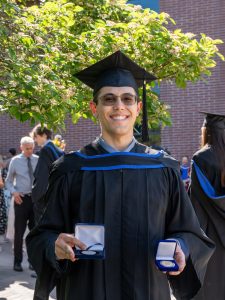
Covaser, who graduated from UBCO yesterday with a Bachelor of Arts double major in Philosophy, Political Science and Economics, and French, is a top student and recognized leader in BC and Canada. Born in Bucharest, his family moved to Canada when he was young, eventually relocating to West Kelowna. Covaser graduated from Kelowna Secondary School in 2021 as class valedictorian with a dual dogwood diploma in French immersion.

When it came time for post-secondary studies, Covaser’s community involvement and career goals encouraged him to stay in the Okanagan.

“I chose UBCO in part to stay in my hometown and continue my community work, but I was also attracted to the philosophy, political science and economics program,” he explains. “It’s unique in its interdisciplinary approach and seemed perfectly situated to prepare me for my career goals in law.”

It’s also where Covaser continued to thrive. When he graduated yesterday, he was presented with the Lieutenant Governor’s Medal for Inclusion, Democracy and Reconciliation. The medal is offered annually to a graduating student who demonstrates academic merit and contribution to the life of the university and their community.

While at UBCO, Covaser created the Help Teach podcast, which he continues to produce and host, and worked as a language and writing tutor as well as a student ambassador. In addition, Covaser is an ambassador and director at the Rick Hansen Foundation—planning events that highlight accessibility and inclusion and guiding the organization—while also playing in a band and getting exceedingly high grades.

Not only is Covaser UBCO’s 2025 winner of a Lieutenant Governor’s medal, but he is also the recipient of the $10,000 Pushor Mitchell LLP Gold Leadership Prize. Available to graduating students in the Irving K. Barber Faculty of Arts and Science and Irving K. Barber Faculty of Science, this donor-funded award recognizes students who have excelled academically and shown leadership while completing their degrees.

The award will come in handy when he moves to McGill University to begin the bilingual Bachelor of Civil Law and Juris Doctor program, where he will earn two degrees upon completion; the first degree in common law, the other in civil law.

“I have gained a deep curiosity for constitutional law and legal theory throughout my undergraduate studies,” he says. “While I haven’t chosen a specific field of law yet, I’m most interested in constitutional law and government work, entertainment law, human rights law and the functioning of the Canadian judiciary.”

Along with the medal and Pushor Mitchell recognition, he has also been presented with the Walley Lightbody Award in Law, the Amal Alhuwayshil Award in Campus Engagement and Leadership as well as the Petraroia Langford LLP Award in Legal Studies. He also received the University of British Columbia Okanagan Medal in Arts, which is awarded to the head of the graduating class with a BA degree.

It is with deep sadness that we announce the passing of our beloved colleague Dr. Dan Ryder, a cherished faculty member in the Faculty of Arts and Social Sciences’ Department of Economics, Philosophy and Political Science.

Dan Ryder’s enduring commitment to teaching and his unwavering passion for exploring big ideas left an indelible mark on the hearts and minds of countless students and colleagues. While focused on research in areas of philosophy of mind, philosophy of cognitive science and metaphysics, Dan was an enthusiastic and effective teacher, inspiring legions of students and helping them become better critical thinkers. He also led the effort to have critical thinking added as a foundational requirement for the BA degree at UBC Okanagan.

In honor of Dan’s life and legacy, we invite you to join us for a celebration of life to pay tribute to his contributions to our academic community and the many lives he touched.

Memorial Service Details:

  • Date: Sunday, April 27
  • Time: 2 p.m. – 5 p.m.
  • Location: UNC 200 (Ballroom)

Please RSVP by April 15, 2025 if you plan to attend, so we can make the necessary arrangements. RSVPs can be directed to fass.comms@ubc.ca.

We hope you can join us in remembering Dan Ryder.

Sincerely,

Noriko Ozawa  Ph.D
Department Head
Irving K. Barber Faculty of Arts & Social Sciences | Department of Economics, Philosophy and Political Science
The University of British Columbia | Okanagan Campus
ART 266, 1147 Research Road | Kelowna British Columbia | V1V 1V7 Canada
Phone 250 807 9303
noriko.ozawa@ubc.ca

For Marina Selber Cekannauskas, the idea of studying abroad was always an intriguing one, and her journey from Brazil to Canada is a testament to her drive to explore new horizons and pursue a path less traveled.

Born in Campinas, Brazil, Marina attended Etapa, a high school renowned for its educational rigor, and as such Marina’s early academic experiences were shaped by a system focused on preparing students for standardized exams. Despite this structured environment, Marina developed a keen interest in languages, particularly English, which she saw as a gateway to broader opportunities beyond Brazil’s borders.

“I’ve always wanted to have an independent life outside of my country and outside of my comfort zone,” she explains. “In high school, I remember thinking my options were either going to law school, going to medical school or pursing engineering, and my high school was very directed towards that. I wasn’t exactly sure what I wanted to take between those three choices, and if any of those three choices would make me happy, so I was really interested in the idea that I could explore my choices before actually having to make a decision.”

Charmed by the prospect of international study, Marina set her sights on Canadian universities. Her decision was influenced not only by academic considerations but also by a desire to experience a culture known for its diversity and inclusivity. At the time of her application, political uncertainties in the United States further solidified her choice of Canada as a welcoming destination for international students.

“I remember that my parents were not necessarily thrilled with the idea,” recounts Marina. “But it seemed, when talking to other relatives and friends, that Canada had a very positive and very embracing culture. It’s a country that is willing to accept other cultures, and other perspectives as well.”

After applying to several Canadian universities,  Marina found herself at UBC Okanagan (UBCO) in Kelowna. Marina quickly found herself immersed in the intimate and supportive environment of UBCO’s campus. Reflecting on her initial impressions of settling into Kelowna and the Okanagan Valley, Marina soon discovered the advantages of a smaller campus where she could build meaningful connections with professors and peers alike.

“I fell in love with campus, it’s one of the absolute best things about UBCO,” she explains. “People really need to appreciate that because it’s a small campus you can really connect with your professors in a meaningful way.”

One of the defining aspects of Marina’s undergraduate experience was her academic exploration. Marina relished the opportunity at UBCO to sample various courses and disciplines before declaring a major. Initially considering paths laid out by family expectations— Marina’s parents are doctors in Brazil – Marina found herself drawn to economics.

Under the tutelage of passionate professors like Dr. Andrea Craig and Dr. Noriko Ozawa, Marina’s interest in economics blossomed, challenging her to think critically and analytically.

“Both Dr. Craig and Dr. Ozawa were two of the best professors I have ever had,” shares Marina. “In first year both professors, through the way they taught and the passion they brought to the classroom, changed the way that I saw economics.”

While academics were always the number one priority, Marina also found fulfillment in campus life and extracurricular activities. She actively participated in student organizations and engaged deeply with cultural events that celebrated diversity. Her experiences outside the classroom enriched her understanding of global perspectives and reinforced her decision to pursue a career in a field where she could make a meaningful impact.

Marina’s academic achievements culminated in her graduation in 2024, a milestone marked by both nostalgia for her time at UBCO and excitement for the future.

“Attending the in-person convocation ceremony was a great experience,” Marina says. “It was very nostalgic, so I cried a lot when reflecting on my journey that ended in graduating.”

Armed with a degree in economics and valuable professional connections forged through internships and academic mentorship, Marina has embarked on a career in the corporate world. Her current role as a Graduate Cost Consultant at Turner and Townsend allows her to apply her analytical skills while learning about project management.

“The work I do is quite interesting. I always thought that I would miss school because I loved it so much, but because I am learning every day, sometimes it doesn’t feel like I left.”

Looking forward, Marina plans to pursue further academic qualifications, possibly a master’s degree, to deepen her expertise in economics and broaden her career opportunities.

And while Marina’s journey abroad continues, her story at UBCO underscores the value of international exchange and the potential for personal growth and professional development in unfamiliar surroundings.

“At first, I underestimated the impact attending UBCO would have on my life. But after building relationships with professors and making friends, and my positive experience, I want everyone to know how great UBCO is.”

See what the UBCO Irving K. Barber Faculty of Arts and Social Sciences experience was like for our alumni — including some helpful advice for current students — and discover where they are now in their careers.

Name: Braydon Neiszner
Program: Bachelor of Arts, Honors in Economics with a Major in Mathematics
Graduated: May 2022
Hometown: Chestermere, Alberta

Why did you choose UBCO?
When still in high school, we had recruiters from UBCO visit our school and they spoke of a UBC campus in Kelowna and of the Philosophy, Politics and Economics program. I had always been drawn to math, along with economics and social studies, which was very much politics and philosophy. So when I learned more about UBCO, it was like a light bulb turned on. I realized I could spend the next four years learning the things that I love.

Why did you choose your program and what do you like most about it?
In my first year, I took a diverse set of courses, including philosophy and economics. As I moved through that first year, I found I really enjoyed all the classes, but gravitated towards economics.  It was the perfect amount of math and visualization and narrative that I needed. At that point, I knew was going to choose economics.

Do you have a favorite class, professor, or staff person? If so, who/what and why?
I really hit my stride and everything clicked in my second year, and that is almost entirely due to Dr. Noriko Ozawa. Dr. Ozawa extracts the best out of people, and has a passion for economics and teaching that to this day I still haven’t encountered. Dr. Ozawa does an extremely good job of nurturing fascination with the way that people try and explain the world while challenging her students. That was something that I had never seen before, and it was something that scratched an itch I didn’t know existed.

What are your future career and/or educational goals?
After graduating from UBCO, I completed my Master of Arts at the University of Toronto and am now working in a pre-doctoral fellowship at the Wharton School of Business, at the University of Pennsylvania. I hope to be at a top PhD program for Economics in the next year and the dream would be to work on projects that help us to better understand the cities we live in.”

How has your experience at UBCO changed you?
I am ready to take on the world. There is definitely no better place to go than UBCO. It’s a place that encourages you to think big, to think of all the possibilities, it’s a place that nourishes and develops you, all while preparing you for life post-graduation.

If you had to convince another student like you to go to UBCO, what would you say?
What is mind-blowing about UBCO is that when you leave, the school doesn’t leave you. You will forever be a part of this incredible network, no matter where you are in the world. When I have ‘UBC’ on my university sweater out in public, and someone recognizes UBC – you realize how much the network stretches across the world.

See what the UBCO Irving K. Barber Faculty of Arts and Social Sciences experience was like for our alumni — including some helpful advice for current students — and discover where they are now in their careers.

Name: Sarah El Kaissi
Program: Bachelor of Science, Honors in Economics
Graduated: May 2022
Hometown: Lebanon

Tell me about your life before coming to UBCO.
Originally from Lebanon, I grew up and was educated in Dubai. I wanted to follow in my brother’s footsteps, who went to UBCO to pursue a degree in International Relations.  I was ready to take on the world and wanted to start something new away from home.

Why did you choose UBCO?
We had a UBC representative visit our high school, and it was very helpful to hear directly from a representative of what the environment would be like, what the process would look like to apply. I then toured a number of different Canadian universities to get a feel for them, and that was really helpful. I knew right away I didn’t want to be in a large city, so Kelowna was the perfect fit. The campus was gorgeous and the residences were also new and inviting, and the smaller class sizes were also very appealing.

Why did you choose your program and what do you like most about it?
Before coming to UBCO, I had a conversation with my high school business teacher, who also taught economics. I felt like something was calling me towards economics and my teacher encouraged me to explore that interest at university. In my first year, I took Economics 101 and Economics 102 as electives and that’s I when I met Dr. Noriko Ozawa.  Dr. Ozawa made the learning environment really welcoming, it really felt like a family, everyone was supportive of each other. I loved it.

Do you have a favourite class, professor, or staff person? If so, who/what and why?
I have to three favourite professors. Dr. Ross Hickey taught the course that made me to do an honors degree, while Dr. Andrea Craig, who first worked with as a Teaching Assistant, really challenged the way I thought when taking Dr. Craig’s honors seminar. Dr. Ozawa was also had a major impact on my experience, giving me the opportunity to teach undergraduate students.

What are your future career and/or educational goals?
I have just started a new position as Underwriting Associate at Zurich Canada after working as a marketing and operations manager for a small business. What I like about economics is that it touches everything, and it’s part of everyone’s world in some capacity, and I feel that way of insurance as well. I feel like the two tie nicely into each other, and it’s an interesting application of my education.

How has your experience at UBCO changed you?
I’m definitely more of a people person after attending UBCO.  All of those experiences, be it a Teaching Assistant or the resident advising work that I did, put me in situations where I had to develop team and leadership skills. From those experiences, I have developed a love for interacting with people.

If you had to convince another student like you to go to UBCO, what would you say?
People should know the incredible experience isn’t limited to the Economics program, it is universal. Like everyone who goes to UBCO, I have nothing but amazing things to say about the university. It felt like a second home, and I miss it a lot.